

A new Fojo initiative is immersing journalism educators in professional media houses, helping bridge the gap between journalism education and newsroom practice while strengthening learning for future journalists.
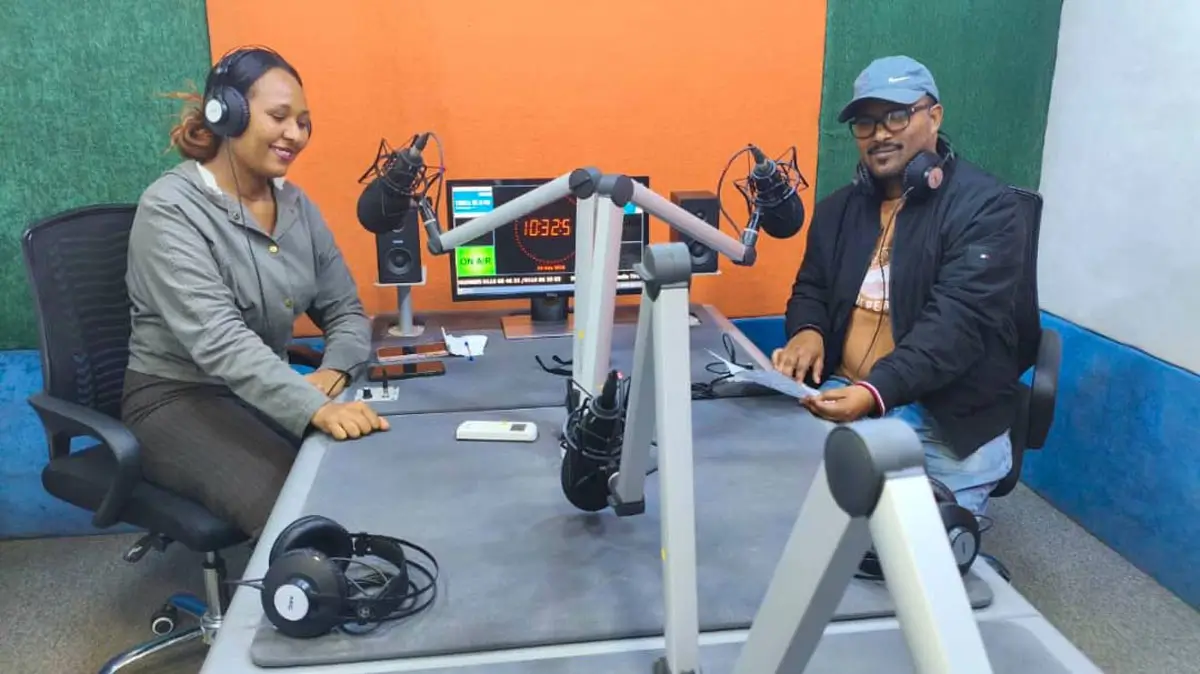
This July, Fojo Media Institute, with support from the Embassy of Sweden in Addis Ababa, launches the Journalism Educators Media Externship Project, placing twelve journalism educators from six Ethiopian universities inside professional newsrooms for two weeks of full-time immersion. At Addis Fortune, Arts TV and Tirita FM they join editorial meetings, pitch story ideas, produce content and work alongside journalists, editors and producers as members of the newsroom.
The project introduces a new approach to journalism education in Ethiopia reconnecting classroom teaching with newsroom practice, so educators return to their universities with first-hand professional experience.
The idea begins with a simple question:
How can educators prepare students for today’s newsrooms if they rarely experience those newsrooms themselves?
Before launching the project, Fojo surveyed journalism educators across Ethiopia. The findings pointed to a common challenge: limited newsroom exposure, theory-heavy teaching and weak collaboration between universities and media houses. Educators also expressed a strong desire for more practical learning, closer engagement with media professionals and a better understanding of today’s newsroom realities.
The externship responds directly to those needs. It also builds on Fojo’s long-term investment in journalism education through pedagogy training and practical learning. This time, the investment reaches the educators themselves.
Voices from educators in the media externship
For Workineh Diribsa from Jimma University, the externship is already reshaping the way he teaches.
“It is a great opportunity to actually be inside a media house and hear the real stories behind how journalism is done. Being inside the newsroom helps you understand how decisions are made, how stories develop and why some ideas succeed while others do not. These are the practical examples we often struggle to bring into the classroom, and I believe that gap will now become much smaller.”
Working alongside journalists at Addis Fortune, he now understands newsroom workflows and professional standards in ways that textbooks alone could never provide.
“I can finally show my students how journalism works instead of simply explaining it.”
For Gebru Kahsay from Mekelle University, the externship fulfils a long-held ambition. After 15 years of teaching journalism, this is his first opportunity to work inside a professional newsroom.
“After fifteen years of teaching journalism, this is my first experience working inside a professional newsroom. I am returning with a much deeper understanding of how journalists think, verify information, make editorial decisions and produce credible stories. It will change the way I teach, the assignments I give and how I prepare students for the profession. Our students deserve nothing less.”
For Workinesh Begna from Hawassa University, the programme is deeply personal. She graduated during the COVID-19 pandemic, when practical newsroom attachments were cancelled.
“Missing my newsroom attachment during COVID-19 left a huge gap in my professional journey. This externship has finally given me the opportunity to experience what I missed.”
Now, at Tirita Radio, she contributes story ideas, joins editorial discussions and experiences the collaborative process behind every story.
“I understand the newsroom process much better now. I have gained practical tools that will help my students think more critically and better prepare them for professional journalism.”
Although the externship lasts only two weeks, its impact is designed to last much longer. Each educator will return to their university to strengthen course syllabi, introduce more practical learning, share experiences with colleagues, deepen collaboration with professional media houses and helping journalism students graduate better prepared for the realities of today’s media.
Journalism educators media externship
A new Fojo initiative connecting classrooms with newsrooms:
- 12 journalism educators
- 6 universities
- 3 professional media houses
- 2 weeks of newsroom immersion
- Real newsroom experience - reporting, editorial meetings, pitching stories and producing content
- Next step: Educators return to strengthen teaching, revise course syllabi and share learning with colleagues
Supported by the Embassy of Sweden in Addis Ababa