
Since the late 1990s, Fojo Media Institute has worked to strengthen independent media in Ukraine through long-term partnerships and practical capacity building. As the country now faces full-scale war, these efforts continue by rapidly adapting to the most urgent needs of newsrooms. Through practical journalistic skills and strategic media leadership, Ukrainian journalists are equipped to keep citizens informed under extreme conditions.
From Soviet control to impartial news reporting
Fojo’s very first project in Ukraine was launched in 1998. From the outset, the focus was placed on strengthening regional and local journalism, far beyond the central newsrooms of the capital where resources were often greater. During the 1990s, the Ukrainian media landscape was still characterised by old Soviet structures, state or political control, and widespread financial dependence on oligarchs or political actors.
Fojo’s early initiatives focused on providing local journalists with the tools needed to produce professional, balanced and impartial news reporting after decades of Soviet political and economic control. This involved source criticism, press ethics and methods for holding power to account, which was absolutely crucial for building public trust in the free press.
“At that time, we were working on a fundamental shift in how journalism was practiced and how newsrooms were managed. It was an exciting period because we could make such a significant difference,” says Project Manager Veronika Menjoun, who has worked with media development in the region for nearly thirty years.
Over the years, Fojo has built a network of media companies and partners across the country, gaining a deep understanding of the specific challenges Ukrainian media workers face in the field. The work has evolved from thematic journalism training to more complex interventions in organisational development and strategic leadership.
“In the beginning, our work largely consisted of thematic courses in environmental journalism, social reporting, and economic coverage. We also offered courses for media managers, although they looked quite different back then.”
Modernising journalism education
In tandem with these practical courses, it was quickly realised that reforming foundational journalism education was essential. Fojo therefore developed a close collaboration with Ukrainian higher education institutions, particularly the Taras Shevchenko National University of Kyiv, to modernise journalism training, making it more engaging and interactive and moving away from old, one-way teaching models.
“We saw that in order to foster a democratic spirit within academic institutions, we had to use interactive methods and invite students into a democratic dialogue.”
Challenges after the Russian invasion
When Russia launched its full-scale invasion in February 2022, Ukrainian newsrooms were confronted with entirely new challenges. In addition to severe security risks, many media outlets suffered an acute financial crisis. Advertising revenues plummeted, destroyed infrastructure made news distribution and production both more difficult and more expensive, and uncertainty over future income complicated long-term planning. To continue reporting, the majority of newsrooms became dependent on international support and external funding sources. Fojo maintained a close dialogue with its partners to adapt its support in real-time.
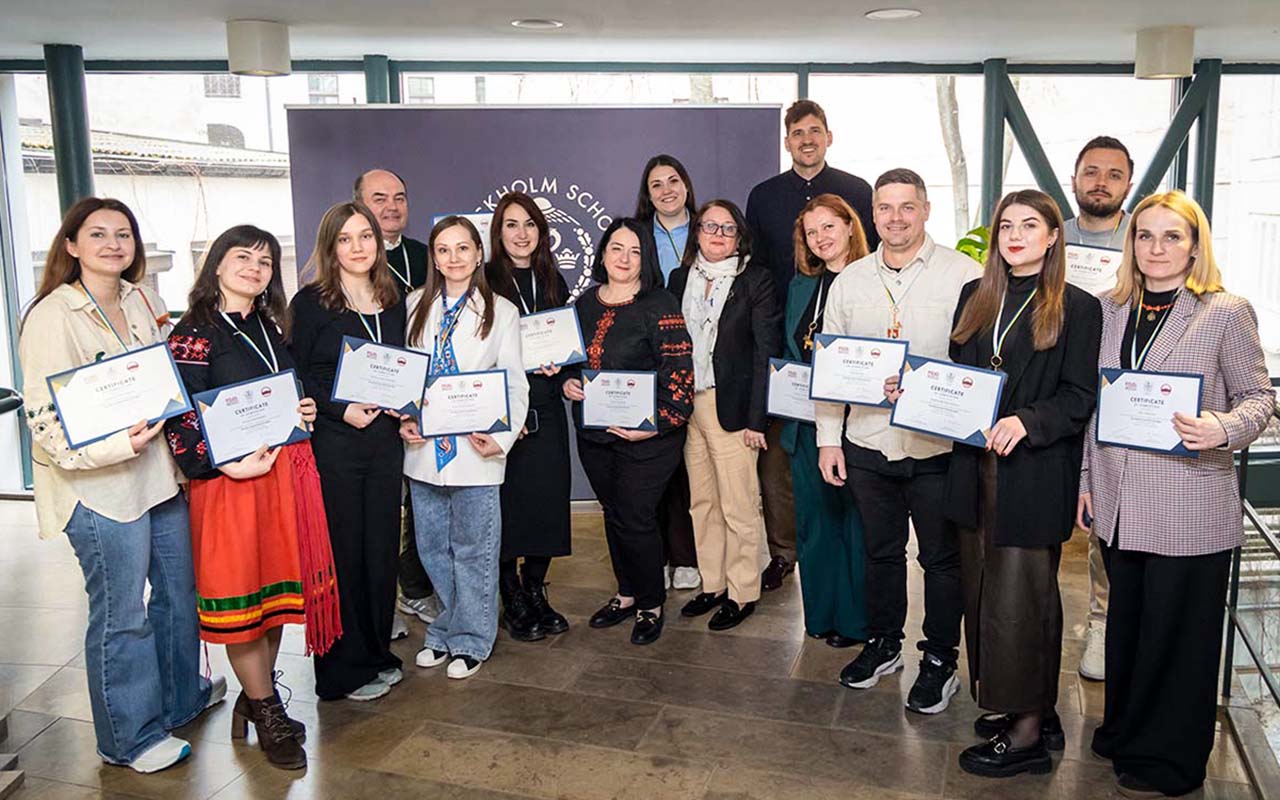
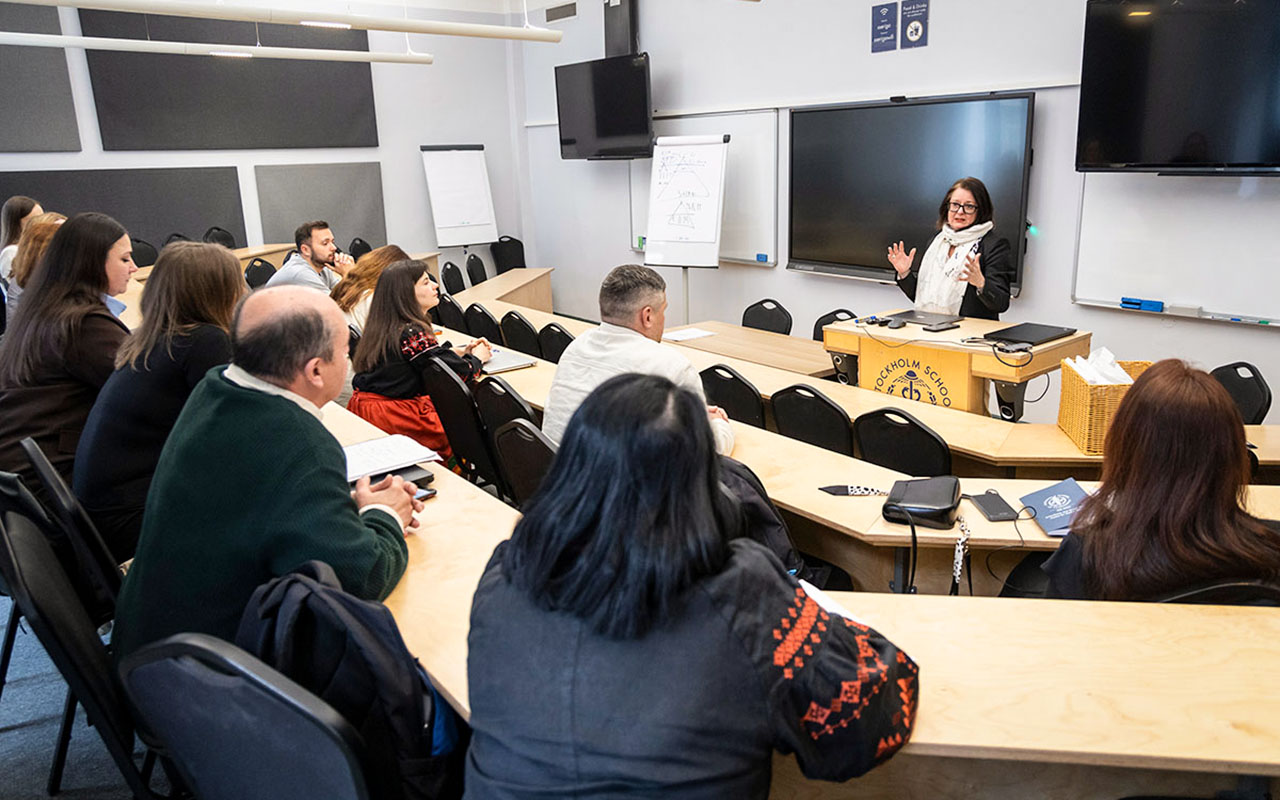
Developing completely new strategies and financing models became imperative to prevent media outlets from being forced to close. Together with the Stockholm School of Economics in Riga (SSE Riga) and the Taras Shevchenko National University of Kyiv, Fojo has created a tailored training programme focused on equipping Ukrainian media leaders with crisis leadership skills.
“Admittedly, many newsrooms today rely on donor funding, but we try to focus more on strategic vision, income diversification, and a mindset where one does not just survive, but also develops,” says Veronika.

Focusing on partners’ needs
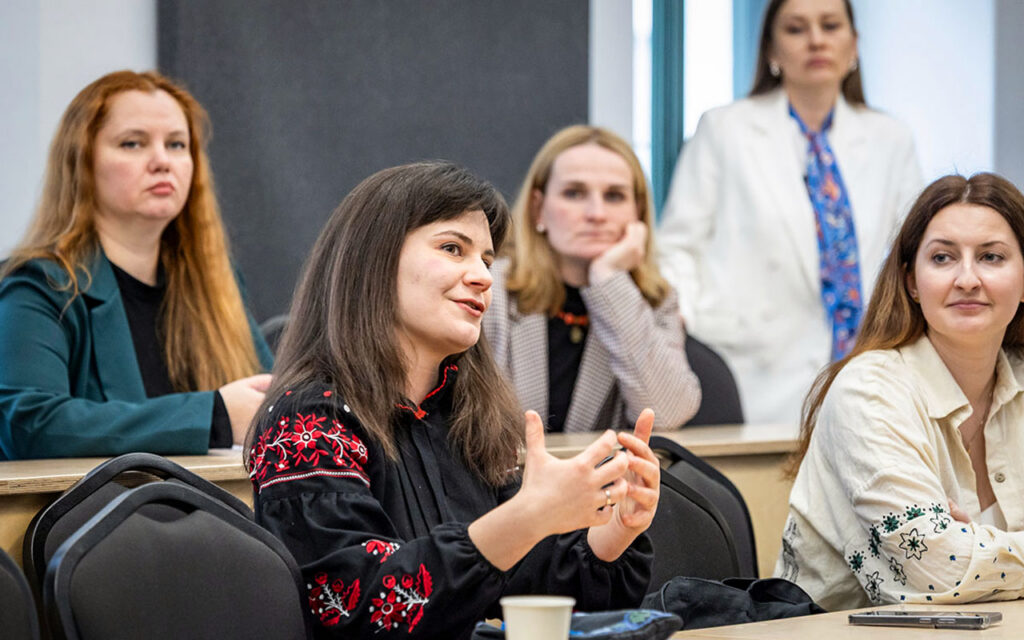
Key areas such as leadership, financial management, audience development, and reaching new target groups are integrated into the training.
“It is about keeping operations alive despite constant power outages, destroyed infrastructure and direct security threats,” says Veronika, who, despite the war and uncertainty, has continued to travel to Kyiv to meet participants on-site.
The war becomes something completely different when experienced on the ground, creating a deeper understanding of the partners’ reality:
“The better you understand the situation, the better support you can provide. It is one thing to participate in conferences and online meetings, but it is something else entirely to come to Kyiv and experience both the calm of the city and the reality of air raid sirens, bomb shelters, and sleepless nights. I find that our colleagues appreciate us coming from Sweden—that we are present and showing solidarity—while for us, it is incredibly powerful to witness their resilience.”
Fojo’s ongoing mission in Ukraine is to listen to its partners’ needs and contribute knowledge, exchange of experience and long-term support.
“Independent journalism is important in all societies, but its significance becomes particularly clear during an ongoing war. Our Ukrainian partners are doing immensely important work,” says Paul Rapacioli, Director of the Fojo Media Institute.