


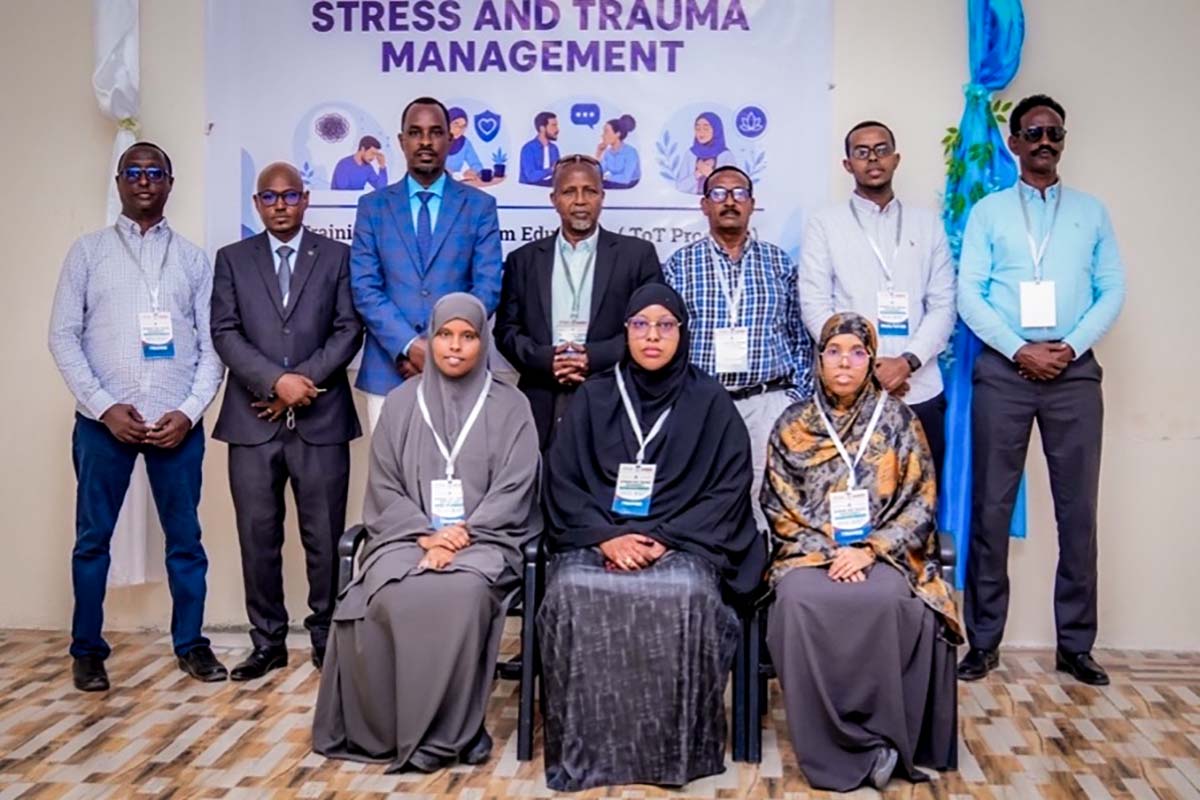
Stress management is now a fundamental pillar for maintaining independent and ethical journalism in challenging environments. Through a new regional initiative in Ethiopia, Rwanda, and Somalia, educators are being trained to equip future journalists with the tools to handle professional trauma. The programme focuses on integrating these essential skills directly into university curricula.
In a world where the information landscape is changing rapidly, journalists face immense pressure. For those covering conflict, gender-based violence and displacement, encountering trauma is a daily professional reality. Without structured support, the profession faces risks of burnout and a drain of expertise, which ultimately weakens society’s access to reliable information.
Fojo Media Institute, supported by UNESCO-IPDC and the EU-funded AGILE programme, has carried out a comprehensive Training of Trainers (ToT) initiative. The aim is to strengthen the capacity of educators at ten universities across Ethiopia, Rwanda, and Somalia. The goal is for these teachers to implement courses in stress management and trauma awareness for their students starting in 2026.
Teaching sensitive subjects requires well-developed trauma-informed pedagogy. Andrew Onsongo from the East African University in Rwanda emphasises how crucial this knowledge transfer is for educators:
“Without the ToT, educators would not have understood concepts of stress, trauma, and trauma-informed pedagogy. They would have lacked the skills to teach this sensitive content safely, risking mistaught concepts and even retraumatising students. The student course mainstreamed stress and trauma as a real, urgent professional reality for journalists”.
By integrating these perspectives into existing courses, such as media ethics, news production and photojournalism, a holistic view of journalist well-being is created. It is about making trauma management a core competence rather than a side issue.
The success of the project relies on multidisciplinary collaboration. The training sessions were led by teams consisting of both experienced journalists with expertise in trauma reporting and mental health professionals. This bridge between academia, the profession, and psychology is central to Fojo’s mission to facilitate collaboration across disciplines and borders.
Zelalem Tesfaye from Bahir Dar University in Ethiopia explains how the practical exercises were conducted to maximise learning:
“Educators recognised the importance of addressing stress and trauma in journalism education. Practical exercises focused on analysing media cases and images through the principles of trauma-informed journalism. Overall, the Training of Trainers-session combined both theoretical and practical approaches to managing stress and trauma”.
Fojo’s vision of better-connected and informed societies rests on resilient and trusted journalism. By strengthening the ability of teachers to prepare their students, we are investing in the future of the information ecosystem. A journalist who has the tools to perform stress management and process trauma is better equipped to report truthfully, ethically and sustainably.
This initiative demonstrates that when we share knowledge and improve practical skills, we create the conditions for people to make informed decisions in a changing world. Stress management is thus a cornerstone in building a sustainable and resilient media sector.