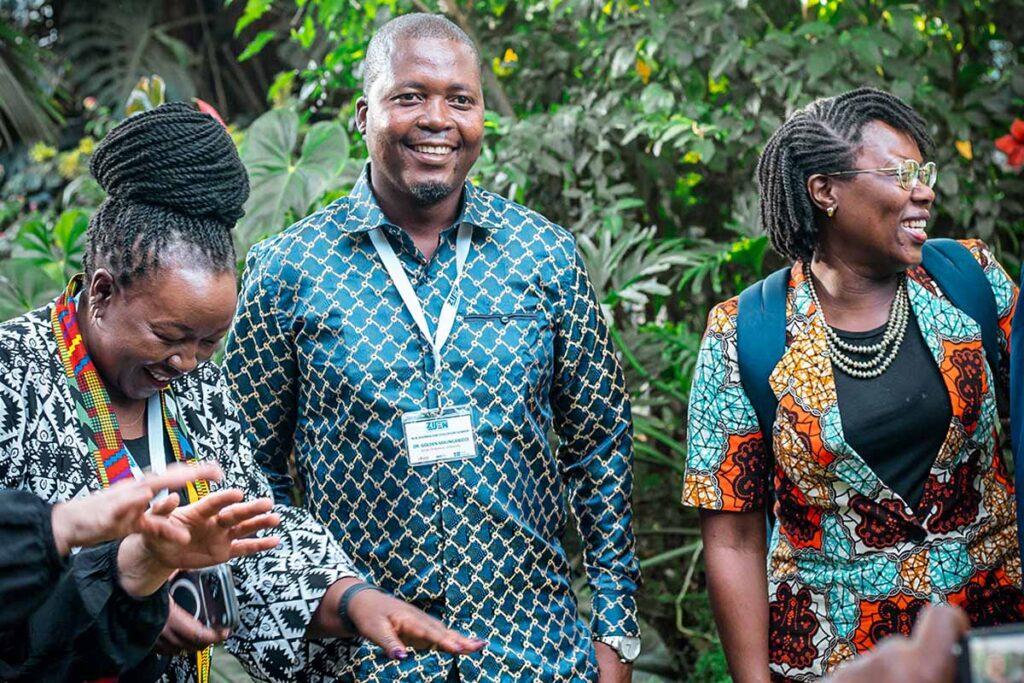

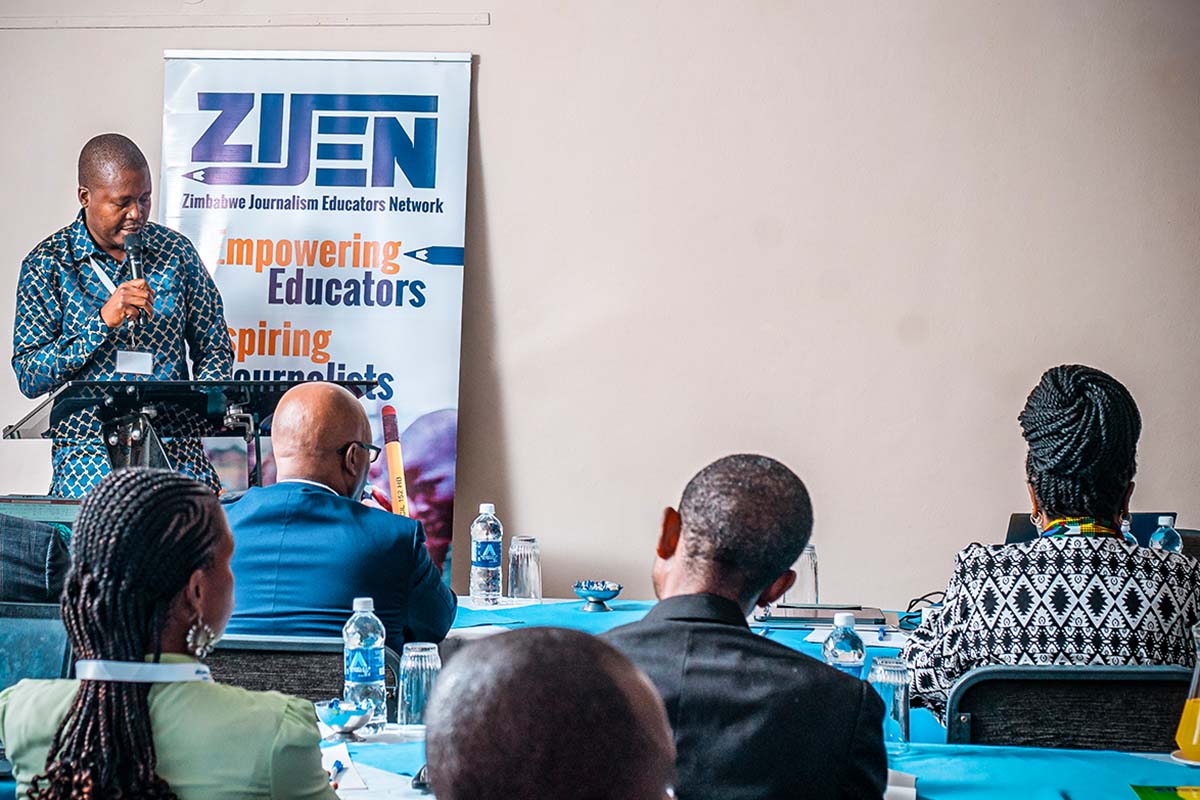
HARARE What began as a conversation among three Zimbabwean journalism lecturers has developed into a national network connecting journalism educators, supporting curriculum development and creating new opportunities for students.
More than 100 journalism students have received training in investigative and climate reporting, educators from 11 institutions are now connected through a national network and several joint research and curriculum-development initiatives are underway. These are some of the outcomes of the Zimbabwe Journalism Educators Network (ZIJEN), established to give journalism educators a structured way to exchange knowledge, address common challenges and develop practical responses together.
Regional initiative spurred new ideas
The idea emerged in 2023 when three journalism educators attended the African Journalism Education Network (AJEN) conference in Rwanda through Fojo’s Journalism Education Programme. Exposure to similar initiatives elsewhere in Africa prompted discussions about the value of a national platform that could connect journalism schools in Zimbabwe and support ongoing professional exchange among educators.
That discussion led to the formation of ZIJEN, which was formally launched in 2024. Rather than creating a new institution, the network was designed as a mechanism for sharing knowledge and experience among educators. It provides a forum for discussing curriculum development, research, industry engagement and emerging challenges facing journalism education.
According to Elizabeth Hove, a lecturer at Great Zimbabwe University, the network has already contributed to stronger ties among educators:
“Since the launch of the Zimbabwe Journalism Educators Network, we have witnessed significant improvements in collaboration among journalism and media educators. The network has created valuable opportunities for joint research, knowledge exchange and collaborative curriculum development, thereby strengthening journalism education in Zimbabwe.”
Bridging the gap – together
One practical outcome has been the development and delivery of two practice-oriented courses, Dig Better: Investigative Reporting and Closing the Climate Coverage Gap. Co-designed by journalism educators from Zimbabwe and other African countries, the courses draw on regional perspectives while addressing skills and knowledge areas that are increasingly relevant in today’s newsrooms.
More than 100 students from Great Zimbabwe University, the National University of Science and Technology and Harare Polytechnic have taken part in the training. A group of 36 students then progressed to a mentorship phase, receiving guidance from lecturers and media professionals while developing public-interest stories for publication. The approach was intended to bridge the gap between classroom learning and professional practice by allowing students to apply newly acquired skills in a real reporting context.
The network has also served as a platform for educators themselves. Through exchanges, meetings and regional AJEN events, participants have shared teaching methods, discussed curriculum reforms and explored opportunities for joint research and publishing.
Professor Mphathisi Ndlovu described the change in practical terms:
“Before ZIJEN, institutions largely operated in silos. We now have a common platform through which we can develop projects, conduct research and mentor emerging academics. We are already finalising a collaborative book project involving educators from different institutions.”
Support to female journalism students
Another area of activity has focused on supporting female journalism students. Through the Women Media Leaders of Tomorrow programme, students received training in journalism, leadership and professional development. The programme sought to address challenges that young women often encounter when moving from journalism education into professional media environments.
As the network developed, it also became a forum for examining broader changes affecting the profession. In March 2026, ZIJEN organised its first national summit on artificial intelligence and journalism education, bringing together educators, students, policymakers and media practitioners. Discussions focused on how AI is influencing journalism practice and what implications that may have for journalism education, curriculum design and professional training.
For ZIJEN National Coordinator Dr Last Alfandika, the significance of the initiative lies in its effect on both educators and students:
“Fojo’s support has enabled ZIJEN to connect journalism educators, strengthen institutional collaboration and deliver practical training to students. Its impact goes beyond supporting educators: it is building the skills and confidence of future media professionals across Zimbabwe.”
Continuity beyond individual events
A notable feature of the initiative has been its emphasis on continuity. Training activities have been linked to mentoring, regional exchanges have informed curriculum development and professional networks have generated research and publication projects. This has helped ensure that learning and knowledge-sharing continue beyond individual workshops or conferences.
What began as a conversation among three educators has developed into a platform that supports professional exchange, practical student training and ongoing reflection on the future of journalism education in Zimbabwe. Rather than focusing on individual events, the experience demonstrates how networks can help educators learn from one another, adapt new ideas to local contexts and create opportunities that benefit both teachers and students.