


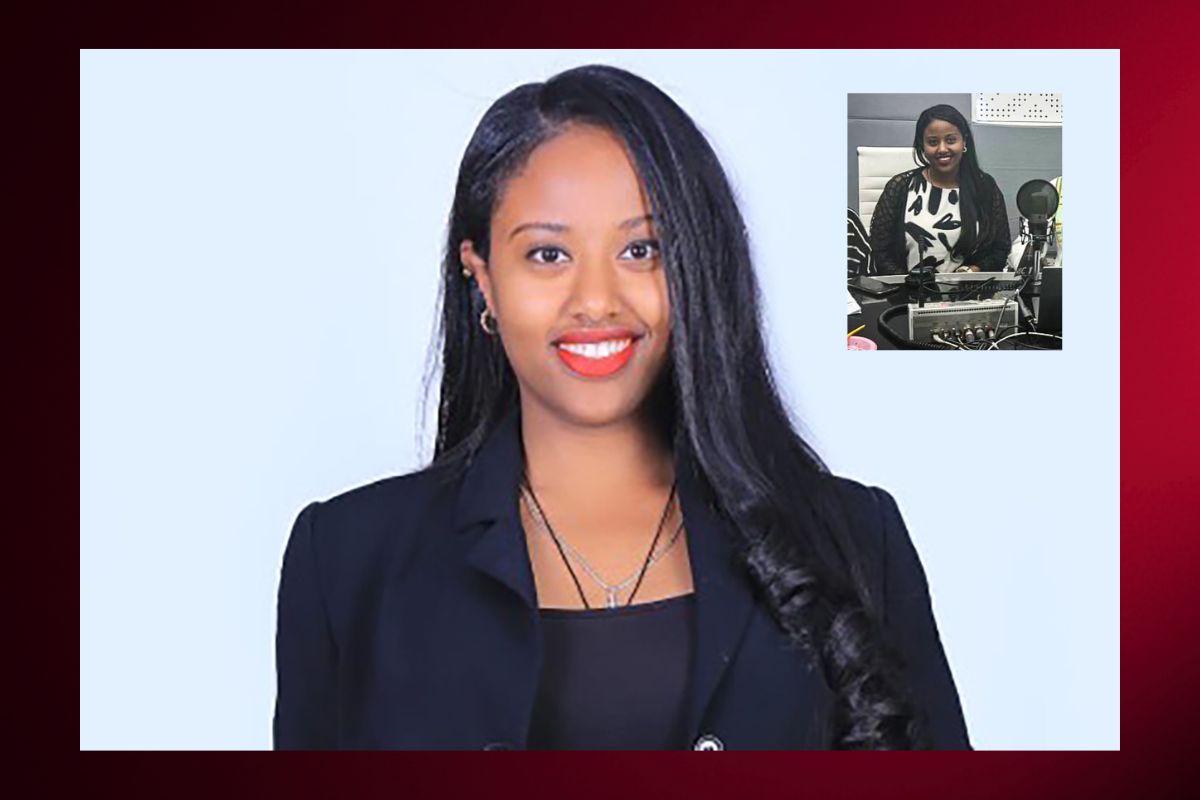
When Edana Solomon enrolled at Jigjiga University to study journalism, her vision was to tell stories that reflected her community and amplified women’s voices. However, like many students in Ethiopia, she was concerned that a theory-heavy education might not prepare her for the demands of a fast-changing media industry.
The turning point came during the 2023/2024 academic year when Edana, a 24-year old journalism student from Addis, was selected as a mentee for the pilot phase of the Female Journalism Mentorship Programme. Implemented by Fojo Media Institute with support from the Embassy of Sweden in Addis Ababa, the initiative was launched across five universities: Jigjiga, Addis Ababa, Jimma, Bahir Dar, and Hawassa.
The programme was designed to strengthen practical journalism skills and support young women entering the media sector.
Turning theory into practice
The programme paired Edana with two mentors: a journalism educator and a seasoned media professional. This structure directly linked classroom learning with real-world newsroom experience.
Through the mentorship, Edana gained hands-on experience in every stage of production. She pitched stories, managed audio and video equipment and practiced mobile journalism alongside professionals.
“The experience made journalism real,” Edana says. “I learned how stories move from an initial idea to production and publication.”
What once felt intimidating, interviewing sources, handling equipment and navigating a newsroom, became familiar territory. More importantly, the experience solidified her place in the profession.
Navigating structural barriers
For many female journalism students, entering media spaces involves navigating significant professional and structural challenges. Cultural expectations, limited role models and mobility constraints can create barriers to entry. Inside newsrooms, women may also face limited advancement opportunities, assignment bias and safety risks.
The mentorship programme provided Edana with the professional networks and resilience needed to navigate these challenges.
“Before, I was not sure I could work in media,” Edana recalls. “Now I feel confident speaking to sources, working with editors and presenting stories.”
Impacting public health through radio
Today, Edana has successfully transitioned from student to professional journalist. She works for an organisation broadcasting through the Ethiopian Broadcasting Corporation, where she produces health-focused programmes. Her work involves translating complex public health issues into accessible information for everyday audiences.
“I feel ready to work in media,” she says. “I know how to produce stories, collaborate in a newsroom and tell stories that matter.”

QUICK FACTS: Bridging the gap in Ethiopia's media
This mentorship programme supports the next generation of female journalists by turning academic knowledge into professional expertise. It utilises a dual-mentorship approach to ensure comprehensive professional readiness.
- Two cohorts: 2023/2024 and 2024/2025
- Expanded reach: Scaled from 5 to 10 universities across Ethiopia to reach more aspiring journalists.
- Growing impact: Support has increased from 26 graduates in the first cohort to 56 students in the second.
- The mentorship model: Mentees are paired with both academic and industry mentors to align classroom learning with professional newsroom standards.
- Practical mastery: Focuses on hands-on story production, technical equipment handling and portfolio development.
- Professional readiness: New 2-month structured internships provide supervised placements in regional hubs and Addis Ababa.