


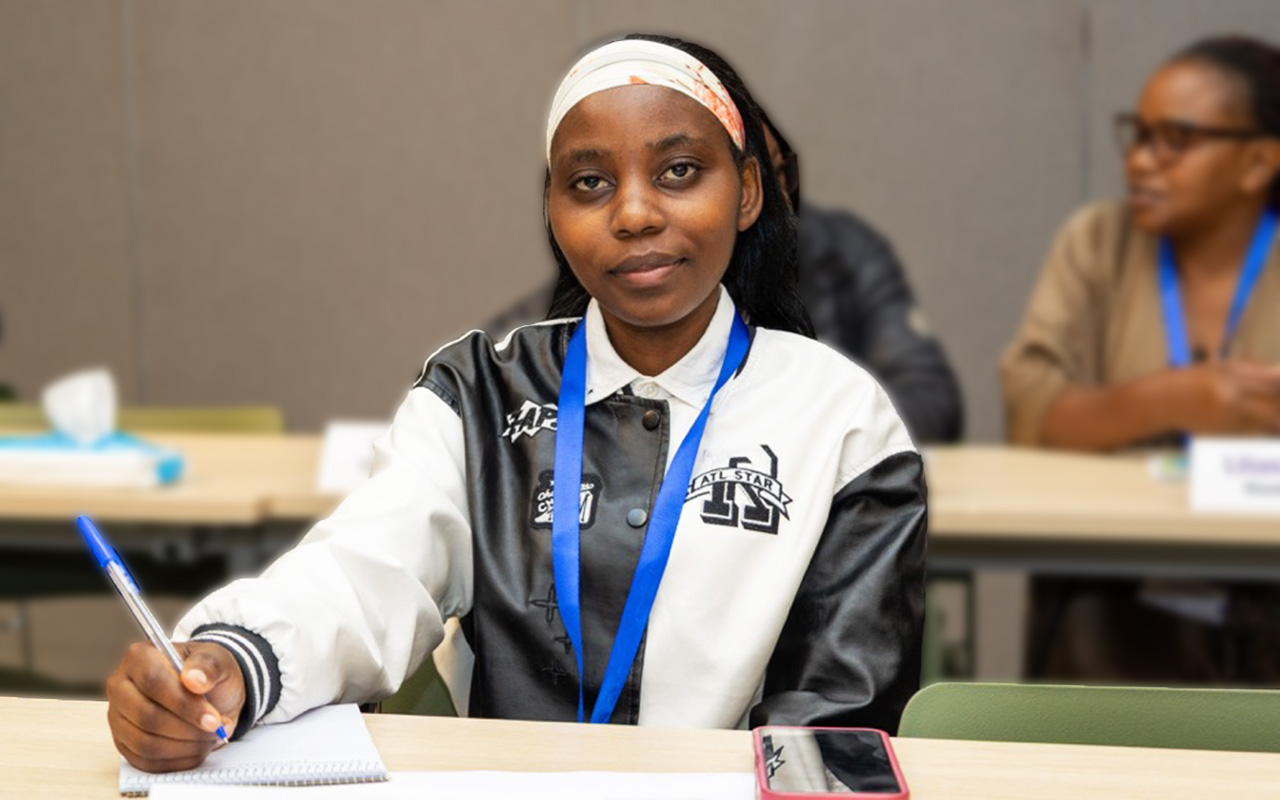
Testimonial by Joy Wambua Mutanu, journalism student at Maseno University, Kenya on attending the Women Media Leaders of Tomorrow-training in Nairobi Kenya in August 2026.
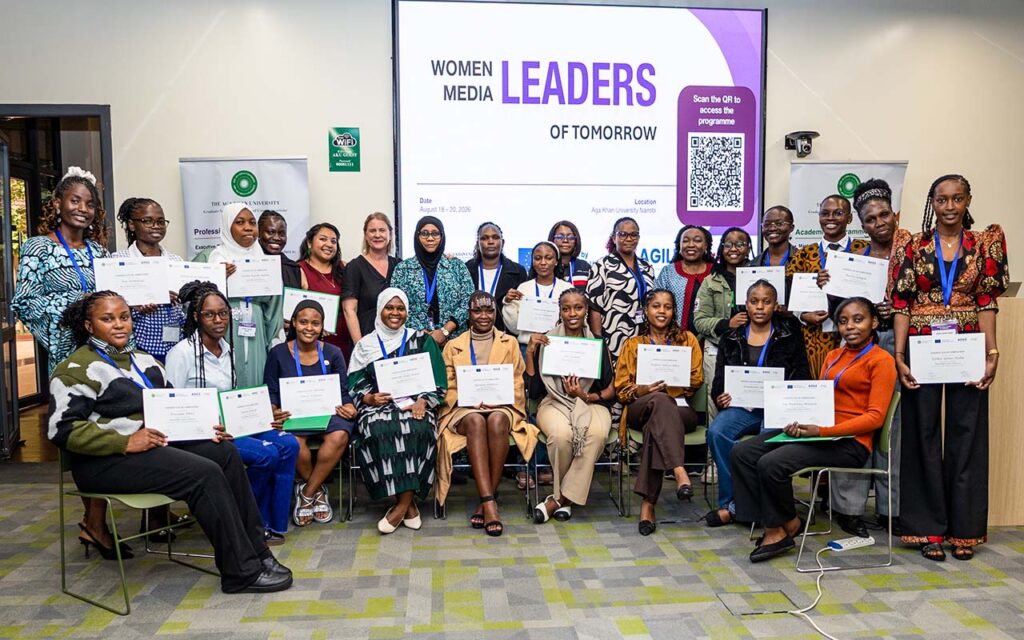
NAIROBI It was August 18th when I walked into Aga Khan University in Nairobi for the Women Media Leaders of Tomorrow-training. I arrived expecting training just like any other media training, three days of learning, networking and perhaps collecting a few notes to carry back to campus. I didn’t know that I was walking into a room that would make me ask important questions and engage in personal reflection.
I was nervous at first, not necessarily because I was afraid, but because I was curious about the people I was about to meet. Students had come from different universities and countries, including the University of Zambia and Dar es Salaam. I found myself wondering how they experienced journalism in their countries and what I could learn from them.
I realised during the introductions that despite our different countries, universities, tribes and experiences, there was something that connected us to each other: we were all young women trying to find our place in the media industry. One introduction stood out, changing the atmosphere in the room; Tracy Anyango, a student from Maseno University, challenged the title of the training.
Instead of “Women Media Leaders of Tomorrow,” she suggested we think of ourselves as “Women Media Leaders of Today.” For a moment, I thought about it. Today? Not tomorrow? I had always imagined leadership as something waiting for me somewhere in the future, a position, a title, years of experience or perhaps someone recognising my potential and saying, “Joy, you are ready.”
Nancy Booker, Dean at the Aga Khan University Graduate School of Media and Communication, took the microphone. Her session, “Claiming space: A journey into media leadership,” challenged that belief. She reminded us that leadership begins long before we feel like leaders. We should not wait for someone to tell us that we are good enough. We should not wait until we are older, have a title or feel completely ready. One statement stayed with me: “You become ready by doing.”
“We should not wait for someone to tell us that we are good enough. We should not wait until we are older, have a title or feel completely ready.”
That hit differently. I realised I had been waiting for permission to become the person I wanted to be. I was waiting for confidence before taking some opportunities, yet Booker reminded us that confidence has to learn to catch up with courage. It made me look at my own journey differently. Perhaps leadership was not about suddenly becoming a different person. Perhaps it was about taking the assignment, asking the question, writing the story, volunteering, applying and speaking even when I was uncertain.
The training was not done challenging me. On the second day, Cynthia Gichiri, Senior Reporter at Africa Uncensored and Julia Majale, Managing Director at Tuko, shifted the conversation from claiming space to building the right relationships. They asked a question that stayed with me: “What kind of media leader do you want to become, and what are you doing today to become that leader?” I realised that wanting to become a leader was not enough. I needed to start preparing for that person now.
The session introduced us to the three pillar network-framework: look around, look outside and look up. Looking around meant recognising the value of peers and collaborators. Looking outside meant seeking mentors and guides. Looking up meant building relationships with champions and sponsors who can advocate for you and open doors. I began questioning myself. Do my peers know what I do? Do my lecturers know what I am working towards? Do my mentors know the work I am doing? Am I building relationships only when I need something?
I had been thinking about networking as reaching people who were already successful. I realised I had overlooked the people already around me. I learned that networking is not simply collecting contacts. It is becoming known for something. And that something, I realised, has to be built through consistency, good work and relationships.
Then came the reality of the newsroom. Daisy Okoti, Research and Impact Editor at Nation Media Group and Faith Oneya, a writer, editor, journalist and communications specialist, reminded us that becoming a media professional also means learning how to navigate relationships, personalities, boundaries, deadlines and expectations. Their message was simple but powerful: do your best, be true to your dreams, passions and work ethic. Take initiative, ask when you do not know. Build the reputation of being reliable.
I realised that knowing my “why” matters because the journey will not always be easy.
But one word stood out for me: “WHY.” Why do I want to be in the newsroom? Why do I want to become a media leader? Why am I pursuing this career? I realised that knowing my “why” matters because the journey will not always be easy. There will be moments when I am criticised, underestimated or uncertain. My “why” can remind me why I started and what I am working towards.
Then came another uncomfortable truth. In today’s media world, my leadership journey does not exist only in physical spaces. Stephen Musyoka, a digital media specialist at Aga Khan University, taught us about digital footprints and how they can speak long before we enter a room. What we publish, what others publish about us and what people share about us all contribute to our professional identity.
That made me think about the journalist I want people to see online. Am I intentionally building my professional identity? Does my digital presence reflect the work I want to be known for? Am I using social media only as a personal space or am I also treating it as part of my professional footprint? Suddenly, leadership felt bigger than having a position. It was about how I show up, how I work, how I treat people, what I stand for, the relationships I build and even the digital footprint I leave behind.
“By the third day, I was no longer asking when I would become a leader. I was asking myself what I was already doing to become one.”
By the third day, I was no longer asking when I would become a leader. I was asking myself what I was already doing to become one. The training also taught me that claiming space does not mean taking all the space. Leadership can be as simple as noticing who has not spoken, asking someone else what they think, mentoring someone, recommending another woman for an opportunity or giving someone else the microphone.
That changed my understanding of leadership. I had associated leadership with being at the front. I now understand that sometimes leadership happens quietly, by making the room bigger enough for someone else to enter.
Joy Wambua Mutanu
This activity was supported by AGILE.
AGILE is a global consortium (2025-2028) which aims to strengthen independent journalism globally, supported by the European Union. The consortium members are Internews Europe, Fojo Media Institute, CFI Développement Médias, Thomson Media and ARTICLE 19. Fojo Media Institute leads workstream 5: The future of journalism