


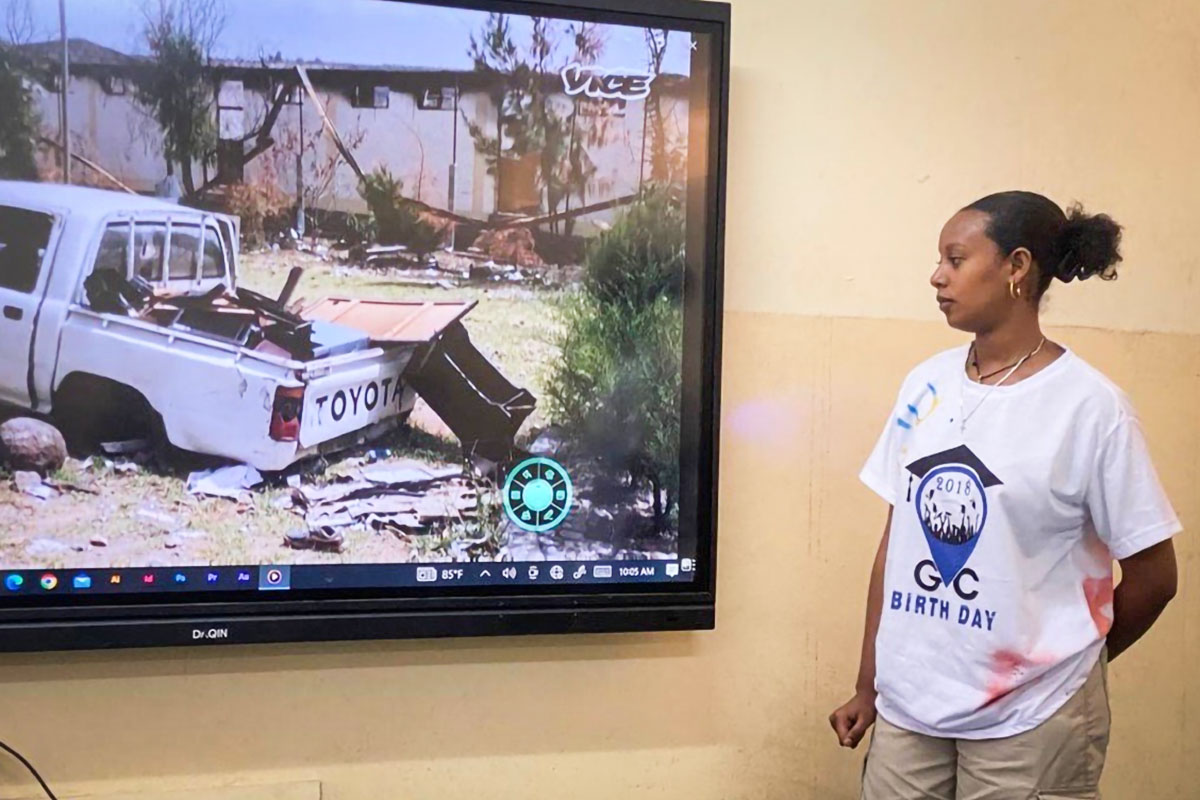
Bahir Dar University educator Zelalem Tesfaye in Ethiopia reflects on how to avoid retraumatisation and what to be mindful of when interacting with someone experiencing trauma.
BAHIR DAR “Two days after intense fighting in the Bugna District in Ethiopia, I travelled to one of the villages with a group of foreign journalists. The physical signs of war were everywhere. Houses had been abandoned and roads were deserted. The silence was unsettling. The village looked more like a cemetery than a place where people once had lived. The men had fled, fearing further attacks. Only women, older people, and children remained behind, trying to make sense of the devastation.
As we walked through the village, one woman caught our attention. She wandered the street talking to herself, on the verge of tears. Our local guide quietly explained her story. Her husband, an elderly priest who had faithfully served the local church for many years, had been killed during the conflict. With no family members nearby and no community support to help her grieve, she had become overwhelmed by loss. Trauma had consumed her life.
As we walked through the village, one woman caught our attention. She wandered the street talking to herself, on the verge of tears. Our local guide quietly explained her story.
A few minutes later, we were taken to another part of the village where we encountered another heartbreaking reality. A nine-year-old girl had survived sexual violence during the conflict. Her older brother had previously brought her from a remote rural area to live with his family so she could attend school. When armed fighters approached the district, he fled to save his own life, leaving behind his wife and young sister. When we visited, children of similar age were playing outside. She was not among them. She remained hidden inside the house. According to her sister-in-law, the child avoided leaving home because of the stigma attached to sexual violence. ‘‘Neighbours would point fingers at her,’’ said her sister-in-law. Instead of receiving medical care, psychological support and protection, she was living in isolation and silence.
Because we arrived with international journalists, many residents believed we might be able to help them. They were eager to share the gruesome experiences they had gone through, hoping their stories would reach the outside world. The survivor’s sister-in-law repeatedly encouraged us to take her picture, unaware of the potential repercussions it would have for the rest of her life. At that moment, I came to realise how easily good intentions can unintentionally cause further harm. The consent being offered was not informed consent. It came from a family member desperately hoping that publicity might bring assistance. But publishing the identity and photograph of a child who had survived sexual violence could have exposed her to lifelong stigma, violated her dignity, and forced her to relive one of the most traumatic experiences of her life.
At that moment, I came to realise how easily good intentions can unintentionally cause further harm.
Fortunately, the journalists accompanying me understood trauma-sensitive reporting. They knew that not every story needs a face. They recognised that protecting a survivor is often more important than obtaining exclusive footage or emotional interviews. They chose not to photograph the child or reveal identifying details. The experience has remained with me ever since. It also left me asking an uncomfortable question: ‘What if the journalists present had never received training on trauma-sensitive reporting?’ The answer is deeply concerning. Without awareness, a journalist might interview the child immediately after the event, ask her to recount painful memories repeatedly, photograph her without considering future consequences, or publish details that make her easily identifiable. None of these actions are intended to cause harm, yet each can retraumatise a survivor.
Re-traumatisation occurs when reporting practices cause survivors to relive their traumatic experiences, triggering emotional distress and undermining their recovery.
Re-traumatisation occurs when reporting practices cause survivors to relive their traumatic experiences, triggering emotional distress and undermining their recovery. Journalism should never become another source of suffering. Conflict reporting requires more than just courage. It requires empathy, ethical judgment and an understanding of trauma. Journalists must constantly balance the public’s right to know with a survivor’s right to dignity, privacy and safety.
Journalists must constantly balance the public’s right to know with a survivor’s right to dignity, privacy and safety.
The AGILE and UNESCO-IPDC initiatives on stress, trauma and trauma-sensitive journalism is therefore not simply another professional training initiative. It is an investment in ethical journalism that protects both journalists and the people whose stories they tell. Some stories deserve to be told. But they must always be told in ways that do not deepen the wounds of those who have already suffered enough.”
Zelalem Tesfaye, assistant professor of journalism and communication at Bahir Dar University in Ethiopia.
AGILE
AGILE is an EU-funded project implemented by a consortium consisting of five members: Internews (lead), ARTICLE19, CFI Media Development, Fojo Media Institute and Thomson Media. The project runs from 2025 to 2028. The project is built around five work streams: Good Information; Inclusive Access; Sustainable Business Models; Accountable Institutions; Future of Journalism.
UNESCO/IPDC
UNESCO’s International Programme for the Development of Communication (IPDC) is a global fund that supports media development, strengthens press freedom and builds the capacity of journalists and media institutions, particularly in countries where independent, professional journalism is most at risk.