


For decades, journalism education has focused on developing technical skills; reporting, writing, interviewing, ethics and more. Yet one critical dimension has remained largely unaddressed: the psychological toll of the work itself. Journalists routinely witness violence, document human suffering and work under intense pressure, often with neither formal support structures nor training. The mental health challenges inherent to the profession have long been treated as individual burdens rather than institutional responsibility.
In Ethiopia, a country where journalism and press freedom face severe pressures, five universities are pioneering training and curricula development that places stress, trauma and mental wellbeing in focus. What makes this initiative particularly significant is not just what is being taught, but how it came to be: an extracurricular course co-designed by the journalism educators themselves, creating ownership and ensuring the content is grounded in the lived realities of Ethiopian journalists and educators.
“Rather than imposing external frameworks, Fojo brought together journalism educators from five institutions through an open call. Bahir Dar, Jimma, Mekelle, Jigjiga and Addis Ababa universities came together to co-create something that truly speaks to our context,” explained Zelalem Tesfaye, Assistant Professor of Journalism at Bahir Dar University, who leads the initiative in Ethiopia. “This collaborative design process means the educators themselves will get a deeper understanding of the area and hopefully invest more in their teaching.”
The co-creation process, developed with the support of the EU through the AGILE programme and UNESCO/IPDC, reflects how journalism education can evolve. Instead of a top-down transfer of expertise, the five institutions engaged in shared learning, drawing on local experience, practice and adapting global perspectives on stress and trauma to the Ethiopian context. This approach recognises that educators who have worked through the content, challenged it, and shaped it are best equipped to deliver it authentically to students.
“In journalism education globally, including across the Horn of Africa, stress and trauma have been severely under-discussed,” Tesfaye noted. “We’re addressing something that affects every journalist but has never been part of the curriculum. By having educators co-design this together, they become advocates for these issues, not just instructors.”
The urgency of this work is particularly acute in Ethiopia’s current context. Newsroom pressures, economic insecurity and exposure to armed conflict are widespread realities for journalists. In regions like Bahir Dar and the wider Amhara region, where communities continue to feel the effects of conflict and unstable security, preparing journalism students to understand and manage psychological pressures is essential for both their wellbeing and their effectiveness as future reporters.
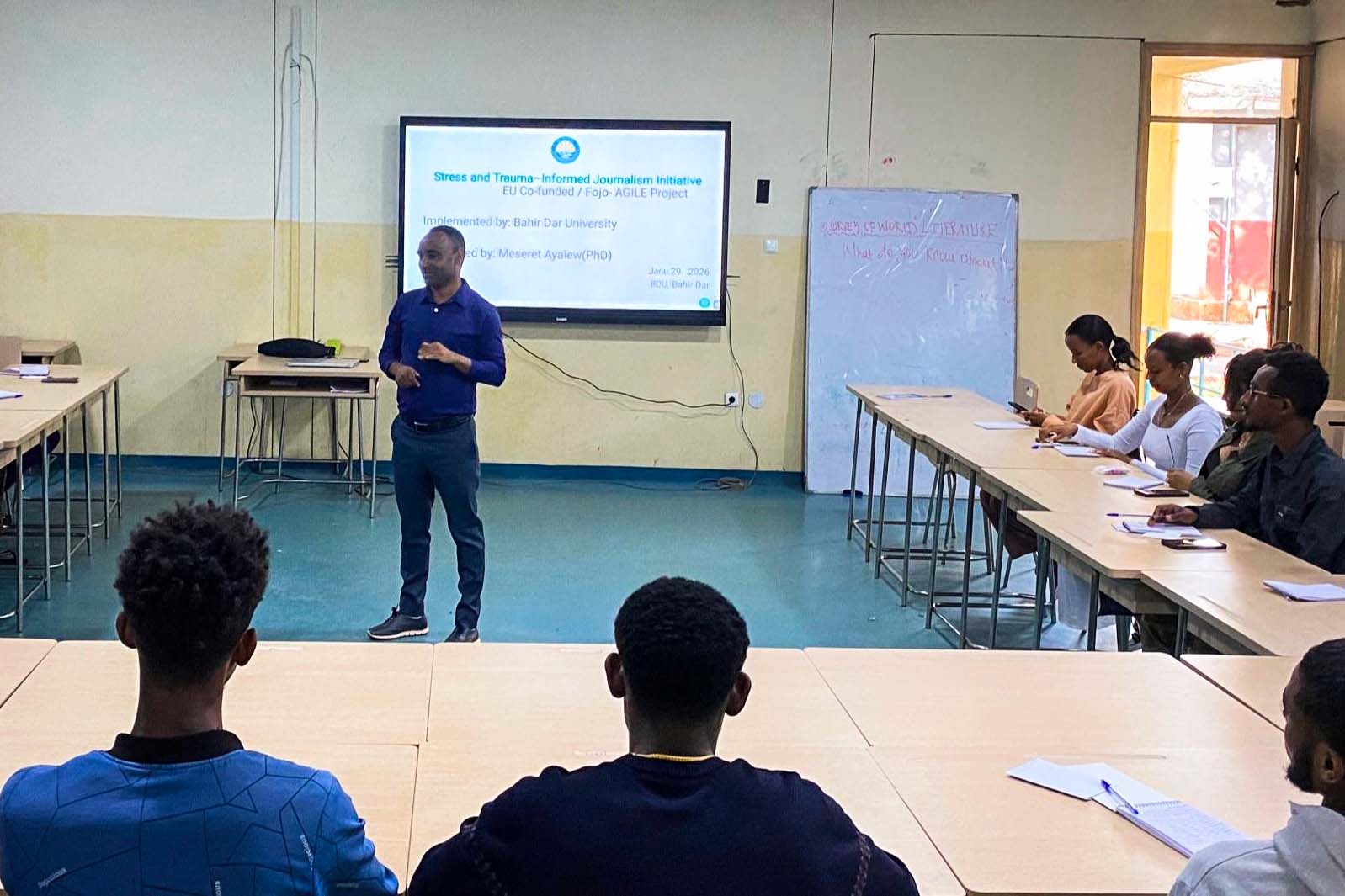
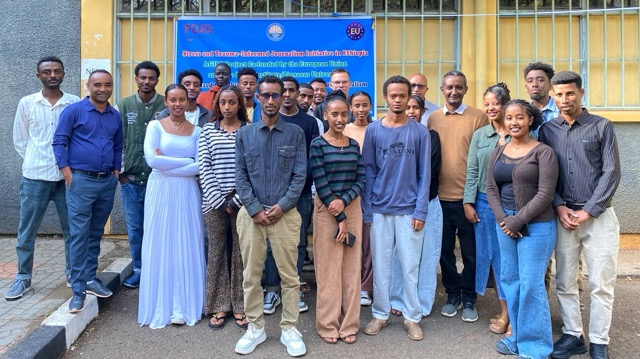
The initiative reached an important milestone in January 2026, when Bahir Dar University became the first institution to start implementing the course called “Managing Stress and Trauma”. To support the students and equip the educators a one-day Training of Trainers session for journalism educators was organised. Following this session, 20 students were enrolled in the first-of-its-kind extracurricular university-level course on managing stress and trauma for journalism students in the country.
Throughout 2026, the course will be rolled out at the four other participating universities, Jigjiga, Mekelle, Jimma and Addis Ababa, creating a network of institutions addressing mental health in journalism education across Ethiopia. At the same time, an informal support structure and acceptance of the psychological toll of the profession are formed.
Sofie Gullberg, Project Manager at Fojo who leads the initiative, emphasised the importance of of this work: “By embedding these issues into journalism education in a flexible manner, where each university takes ownership of the course, we’re not just equipping students with practical tools to manage psychological demands, but we are also supporting conversations around mental health and wellbeing, breaking long-standing taboos in both academic and professional settings.”
The co-design approach means that the educators actively and collaboratively shape the content they teach and become ambassadors of the subject matter. They can adapt examples and respond to student questions with greater confidence. By bringing working journalists from the newsrooms into the classroom, they can also ensure to model conversations about mental health that are well grounded in the needs of the profession. This ownership creates sustainability as the course is not dependent on external experts, but lives within the institutions themselves.
AGILE
AGILE is an EU-funded project implemented by a consortium consisting of five members: Internews (lead), ARTICLE19, CFI Media Development, Fojo Media Institute and Thomson Media. The project runs from 2025 to 2028. The project is built around five work streams: Good Information; Inclusive Access; Sustainable Business Models; Accountable Institutions; Future of Journalism.
For more information about the project: https://capacity4dev.europa.eu/projects/https%3A_en
UNESCO/IPDC
UNESCO’s International Programme for the Development of Communication (IPDC) is a global fund that supports media development, strengthens press freedom and builds the capacity of journalists and media institutions, particularly in countries where independent, professional journalism is most at risk.