


To prepare Tanzania for the future, we must deliberately integrate AI literacy into our journalism education systems. This shift is essential for strengthening the information ecosystem and ensuring journalists can continue to provide reliable news in a changing world.
BY CHARLES NGIDULA. In early March 2026, I attended the AI & Journalism Education Summit in Harare, Zimbabwe. This inaugural National Research Summit, organised by the Zimbabwe Journalism Educators Network (ZIJEN) with support from the Fojo Media Institute, focused on how education must adapt to rapid technological change. While the summit took place in Zimbabwe, the insights shared are highly relevant for Tanzania as Artificial Intelligence increasingly reshapes our own media landscape.
Why the intersection of AI and journalism education matters to me
My interest in this field stems from a deep-seated belief that education shapes the future of journalism. As technology transforms the way information is produced and consumed, training institutions must adapt to ensure journalists remain relevant. Today, AI tools for research, transcription, translation and multimedia production are no longer futuristic concepts; they are becoming common in modern newsrooms.
The intersection of AI and journalism education prepares students not only to use these tools but also to critically evaluate their application. By combining technical skills with closer collaboration between universities and newsrooms, we can better prepare future journalists for the realities of the digital age.
Maintaining the human element in an automated world
While AI can significantly improve efficiency, it also introduces risks such as misinformation and algorithmic bias. Throughout the discussions in Harare, the consensus was clear: AI should support journalism rather than replace human editorial judgement. We, as journalists, must remain responsible for verifying information, making final editorial decisions, and maintaining our credibility with the public.
For Tanzania, a unique challenge and opportunity lies in the limited representation of African cultural contexts in many global AI systems. Given the widespread use of Kiswahili, our institutions are perfectly positioned to contribute to more inclusive AI development. We can lead the way by producing research, datasets and digital content that capture our local perspectives.
Practical steps for Tanzania’s media environment
One key lesson is the need to integrate AI literacy more deliberately into our core journalism courses. Students must learn how AI can assist their reporting while developing the skills to critically evaluate AI-generated outputs. This is vital for maintaining public trust in the media.
To achieve this, we must strengthen the link between universities and media organisations. In line with Fojo’s mission to improve practice and facilitate collaboration, I believe that guest lectures, joint research projects, and structured internships are essential tools to bridge the gap between theory and practice. By preparing journalists to engage critically with these technologies, we strengthen the entire information ecosystem.a ecosystem sustained by trusted journalism.
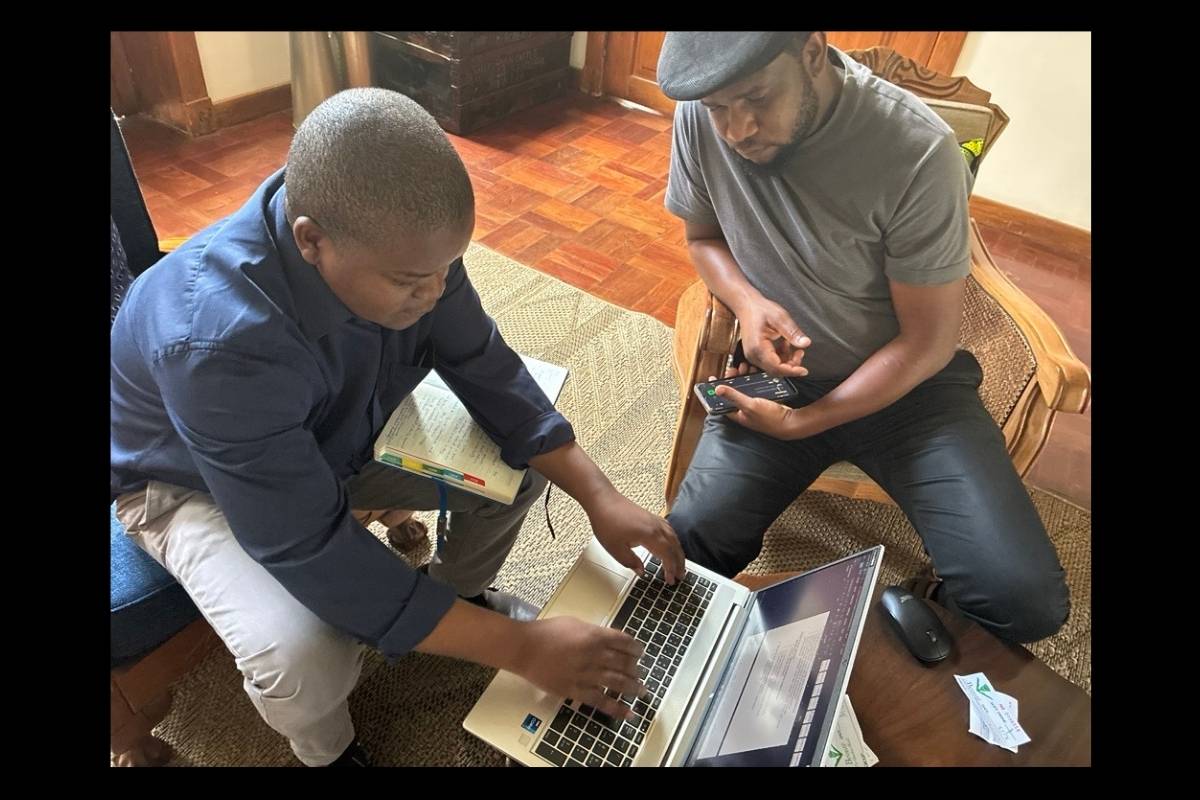
Charles Ngidula is lecturer in mass communication at the University of Dar es Salaam. In this article he reflects on how Artificial Intelligence (AI) is transforming the way news is produced, distributed and consumed. IMAGE: Charles (to the left) in a discussion with a colleague during the summit.
The activity was supported by AGILE.
AGILE is a global consortium (2025-2028) which aims to strengthen independent journalism globally, supported by the European Union. The consortium members are Internews Europe, Fojo Media Institute, CFI Développement Médias, Thomson Media and ARTICLE 19. Fojo Media Institute leads workstream 5: The future of journalism